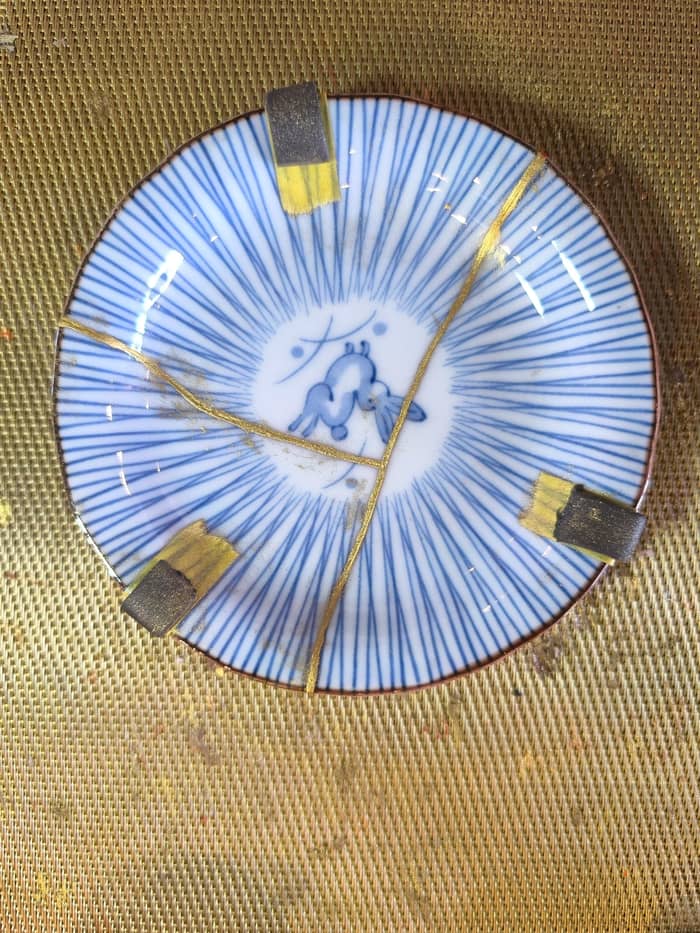
Most-rated, 90-minute session
Kintsugi workshop in Gion, Kyoto
★ 5.0 · 1,736 ratings
- Opening pricefrom $18
- Time at the bench1.5 hrs
- Room sizeNot stated
- Cancel ruleIncluded
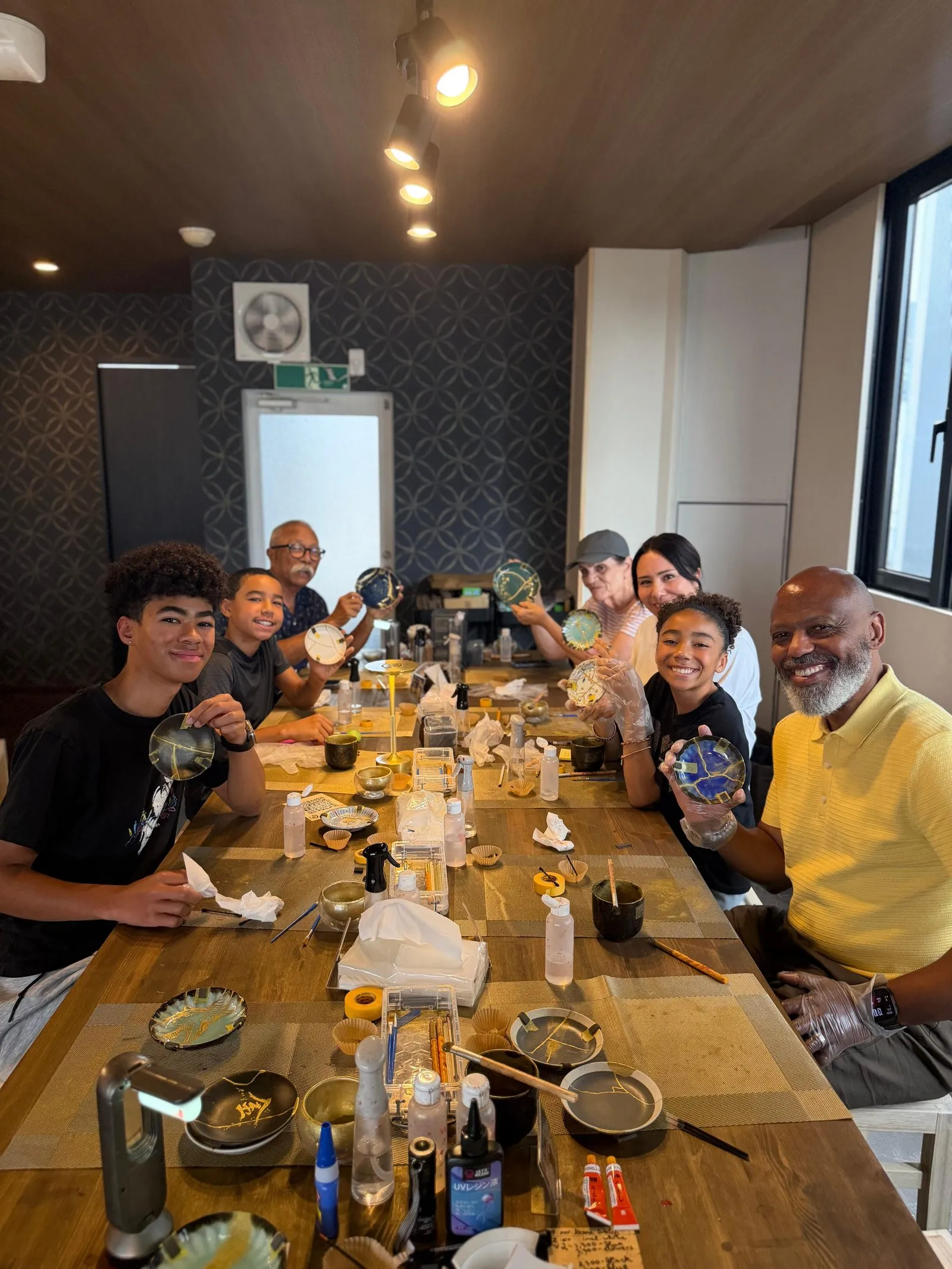
Kyoto · urushi and gold · 90 minutes
A 90-minute workshop in Gion where you repair a ceramic bowl or plate with urushi lacquer and gold powder, guided in English, and take it home.
Book your date
Pick a day and the number of travelers: the total adjusts instantly, then the next page lists the live price and the available times.
What to expect
1,736ratings
ratings on Viator, mean 4.9
1.5hours
the length of the workshop
16people
the most in one shared group
24hours before
advance notice for a full refund
Choices
Most-rated, 90-minute session
★ 5.0 · 1,736 ratings
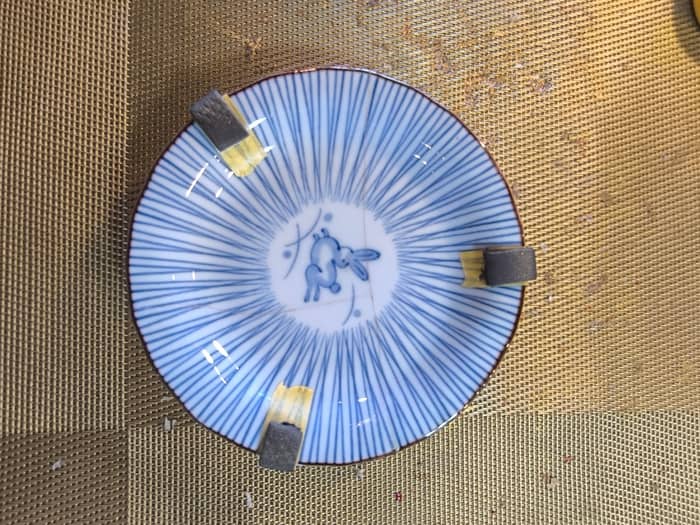
One hour, lowest from price
★ 4.8 · 1,112 ratings
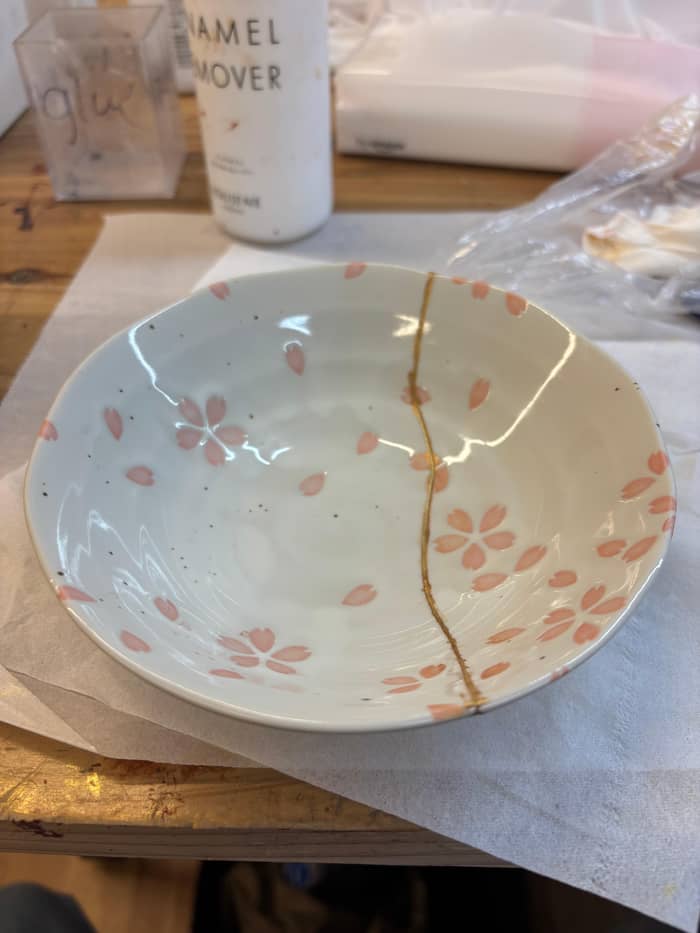
90 minutes with an upgrade option
★ 4.8 · 354 ratings
Long afternoon with tea, 2.5 hours
★ 5.0 · 5 ratings
A guide to the columns
Our pick next to three other Kyoto kintsugi workshops, from a one-hour class to a 2.5-hour afternoon, rated and priced live.
Live GetYourGuide and Viator data: starting prices per person.
Guest voices
★★★★★1,736 reviews, all real
I was guided step by step at my own pace, and our patient leader made it a relaxed, memorable way to learn a Japanese craft.

Our instructor explained every stage of the repair and cheered us on, and I left with a unique piece as a souvenir.

A short, fun session that my child and I both enjoyed, and it also gave us shelter from the Kyoto rain and heat.

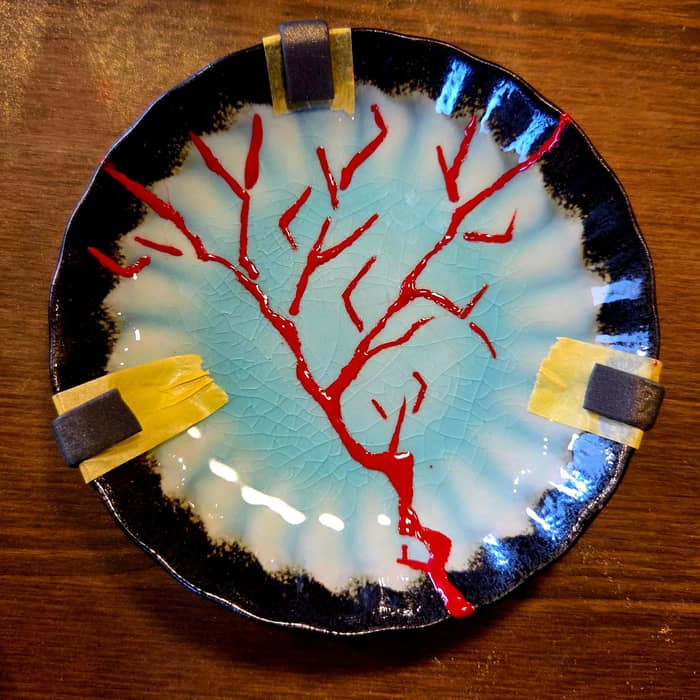
You do not need artistic talent: I followed the instructions, designed my own plate and came away with a lovely reminder of Japan.

What a good outing for a family: the guide stayed patient with everyone, and the room felt calm and peaceful amid a busy city.

An easy, relaxing indoor activity where I turned a plain plate into a small work of art for home, even though I am not artistic.

inside the session
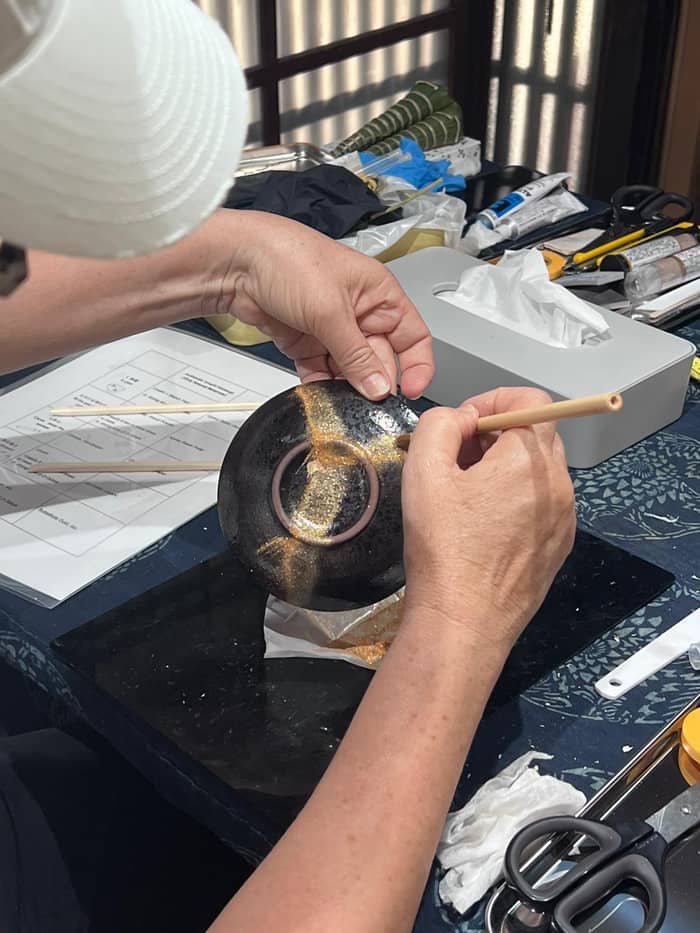
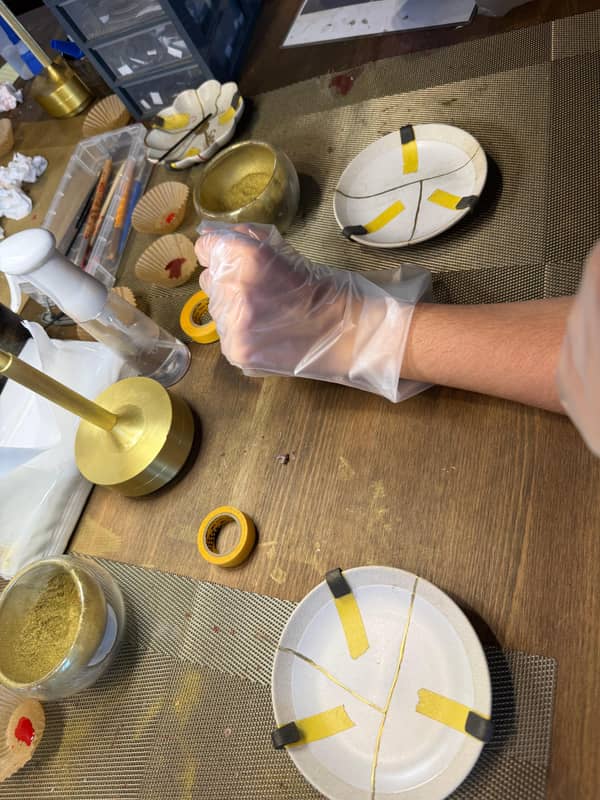
The Viator record for this workshop lists the steps you take with your instructor: clean the cracks, join the pieces, apply gold to the repaired lines and finish the piece to take home. The piece is a ceramic bowl or plate, and the lacquer is described as traditional urushi, used with gold powder.
A live guide leads the session in English and up to 16 people share it, a kintsugi experience in Kyoto that suits a first visit. Each booking holds 1 to 15 travelers and includes at least one adult, so expect a lively craft table and not a private studio. The price includes tools and space to do kintsugi, and a plates upgrade option is available.
What the record does not say is which steps happen before you sit down. Real urushi cures slowly, and JNTO describes a one-hour experience of traditional kintsugi as highly uncommon for that reason. A good question to ask your instructor is simply which parts are yours and which were prepared; the answer shows you what you have actually learned.
Book today, cancel free of chargeOther picks in Kyoto
Experiences near Kyoto and the surrounding area that guests rate well, with live prices and free cancellation.
★ 4.9 (450)1 hourFree cancelling
from$16
Visit tour page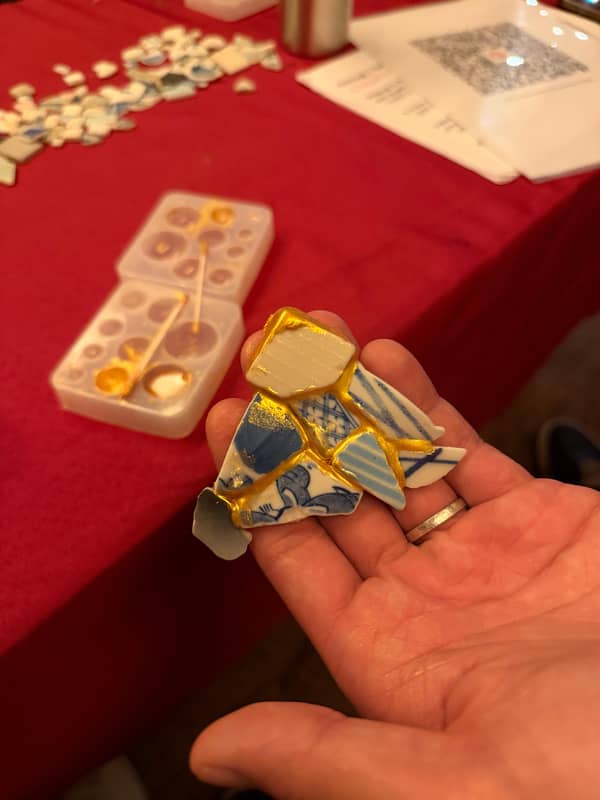
★ 4.7 (113)1.5 hrsFree cancelling
from$44
Visit tour page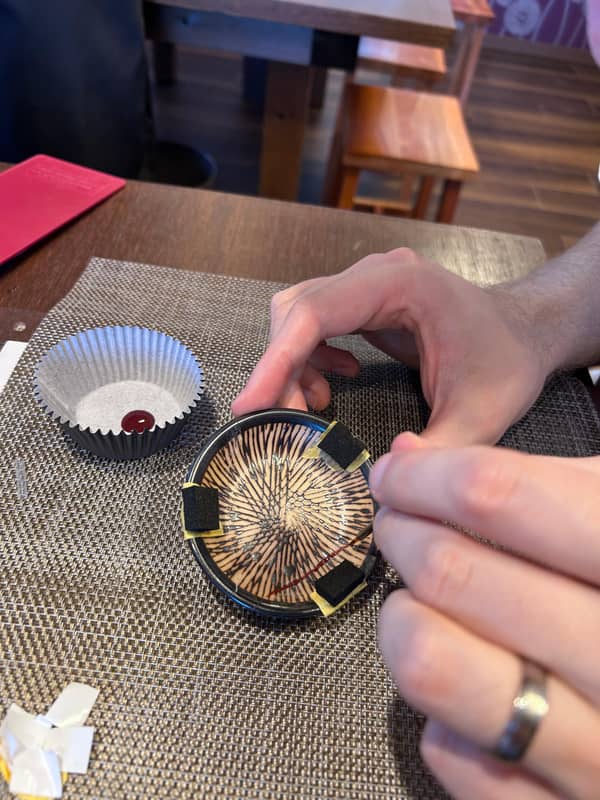
★ 4.8 (844)1.5 hrsFree cancelling
from$24
Visit tour page
★ 4.8 (4,282)45 minFree cancelling
from$49
Visit tour page
★ 4.9 (3,415)30 minFree cancelling
from$6
Visit tour page
★ 4.8 (1,218)Free cancelling
from$21
Visit tour page
★ 4.8 (938)5 to 5.5 hrsFree cancelling
from$86
Visit tour page
★ 5.0 (3)6 hrsFree cancelling
from$1,337
Visit tour pageTours in Kyoto, live from the booking site
Explore Kyoto toursPictures
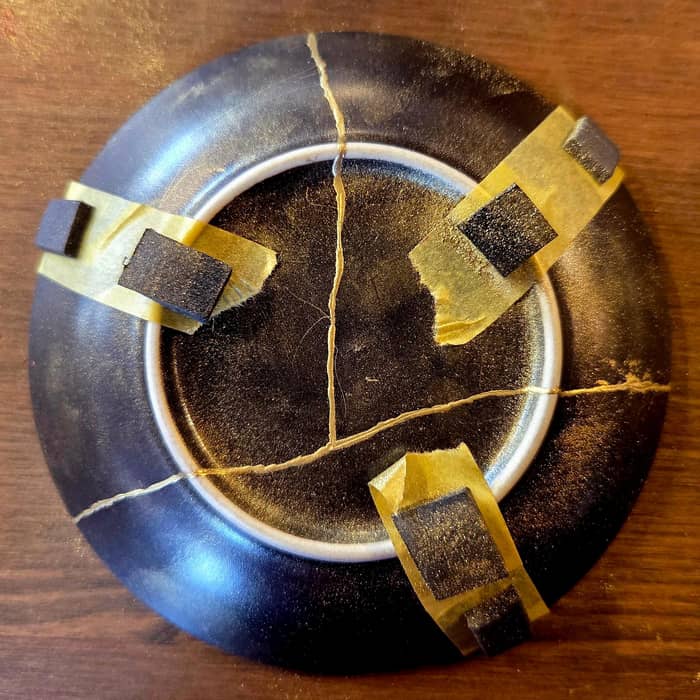
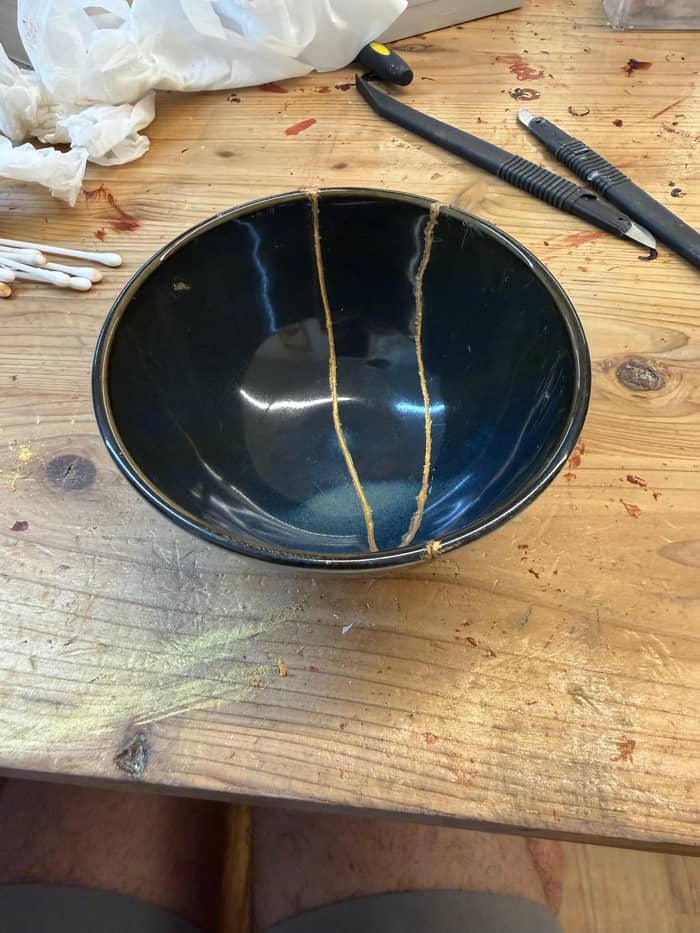
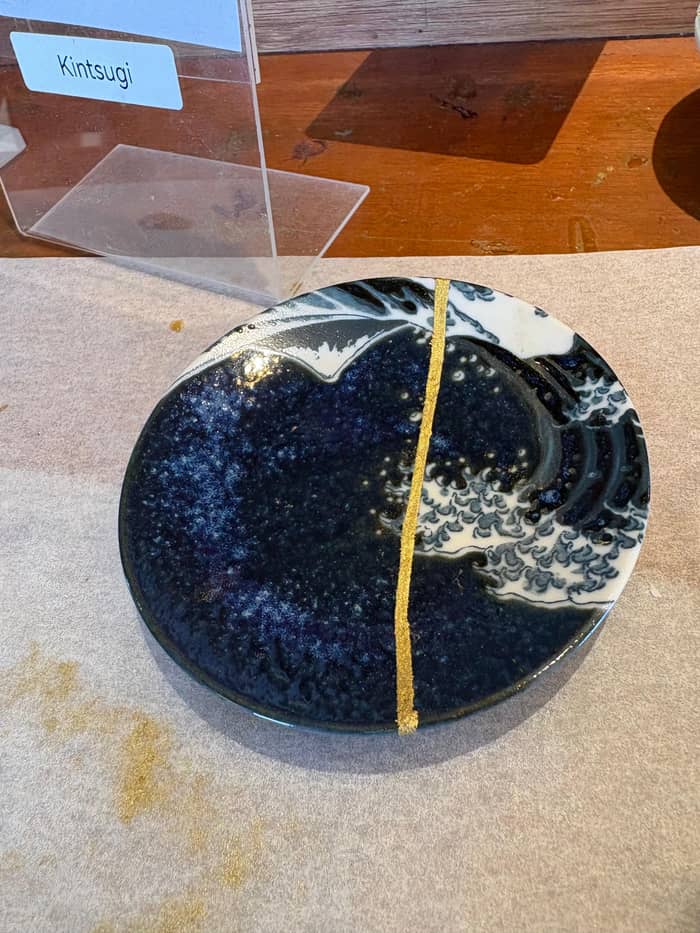
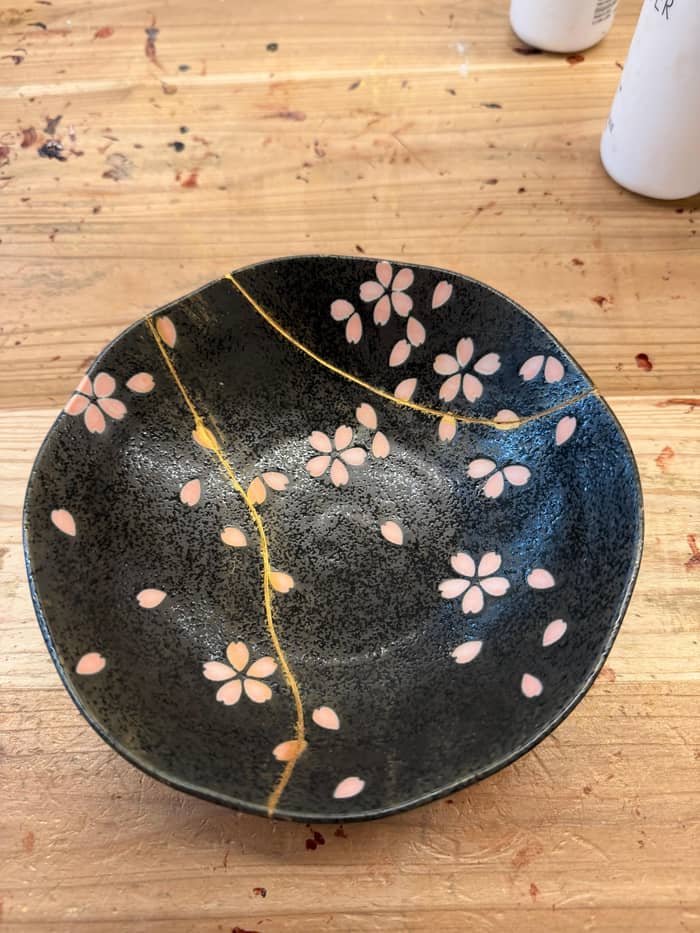
Pieces from kintsugi workshops in Kyoto and Tokyo
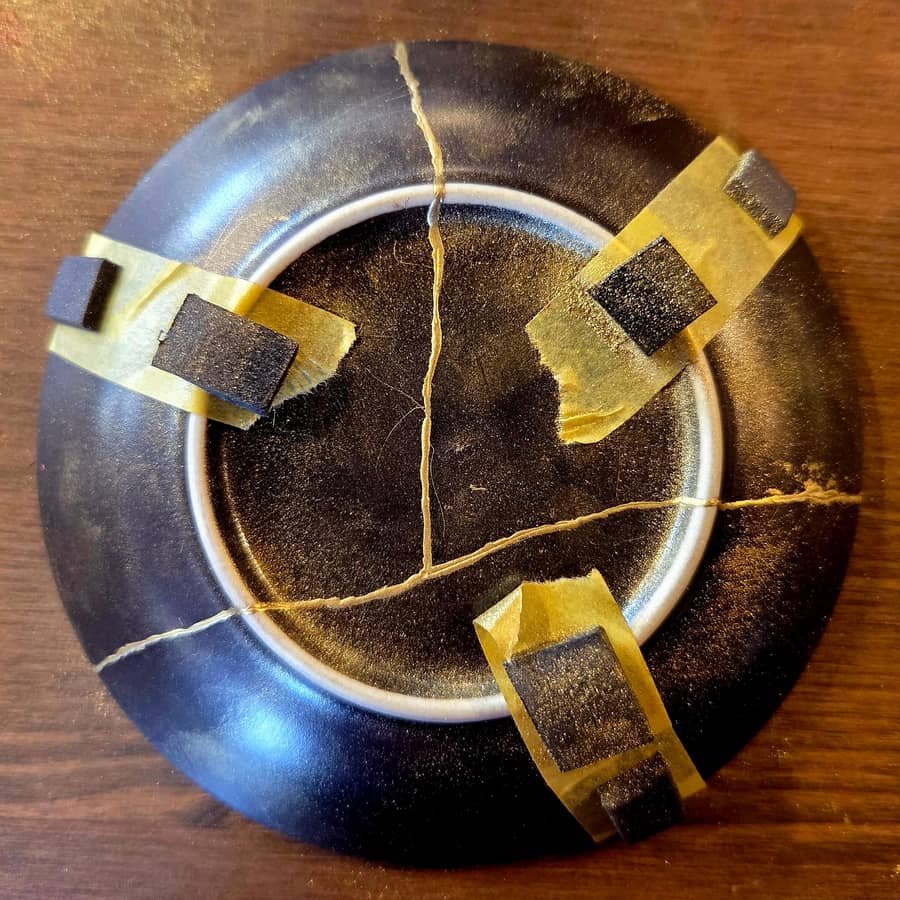
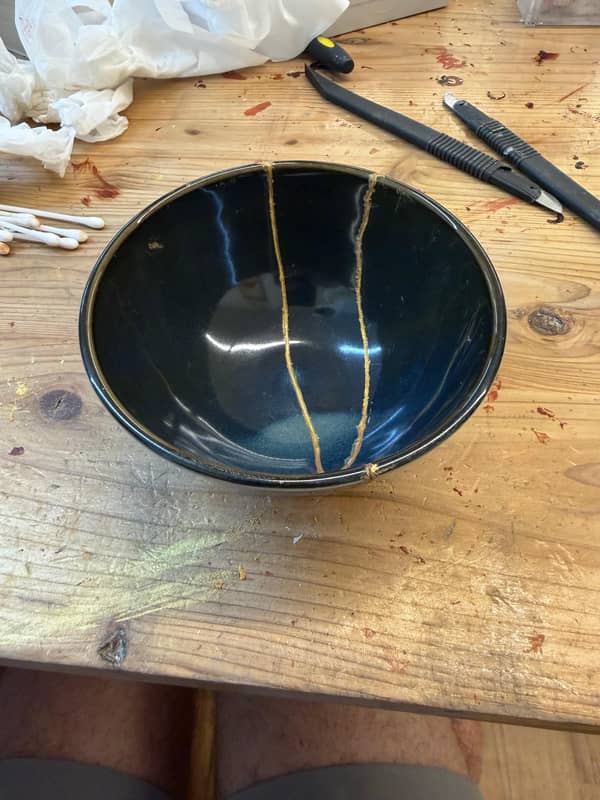
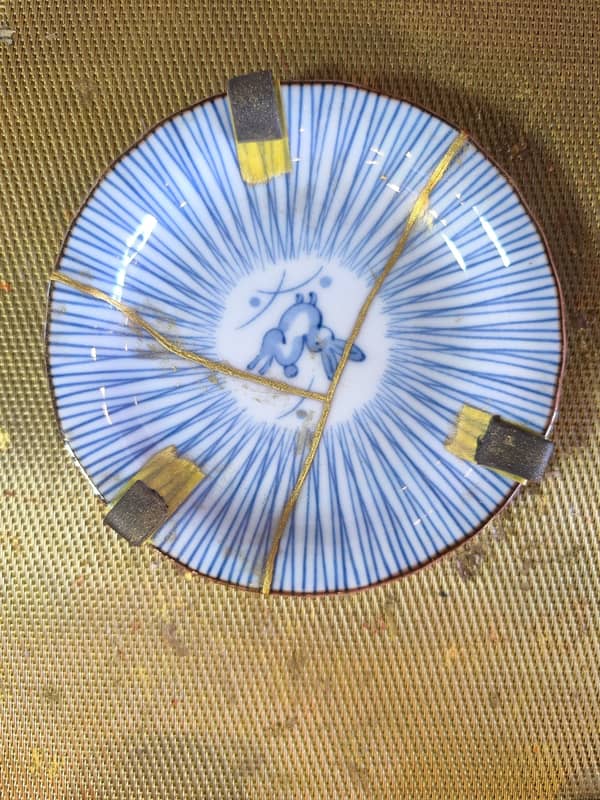
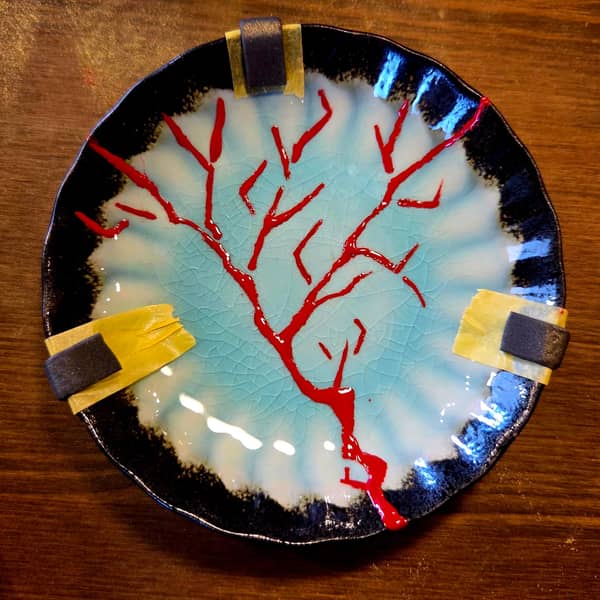
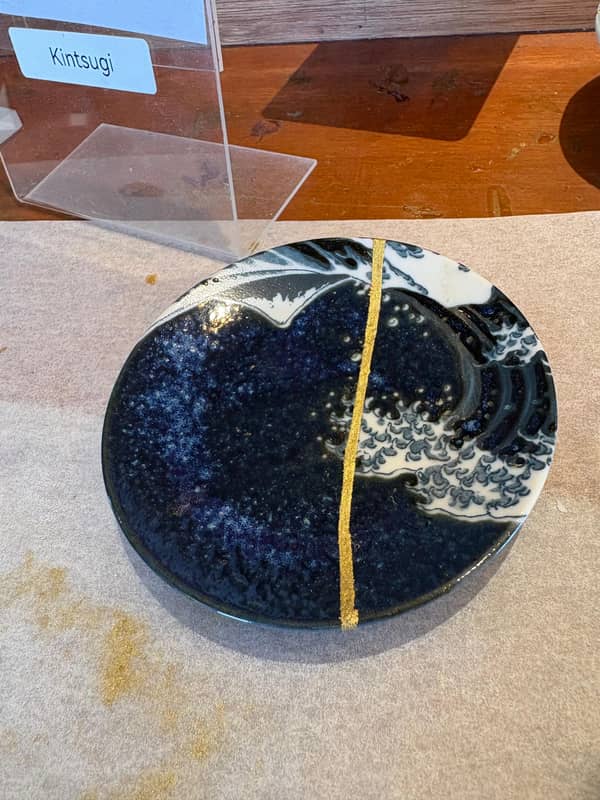
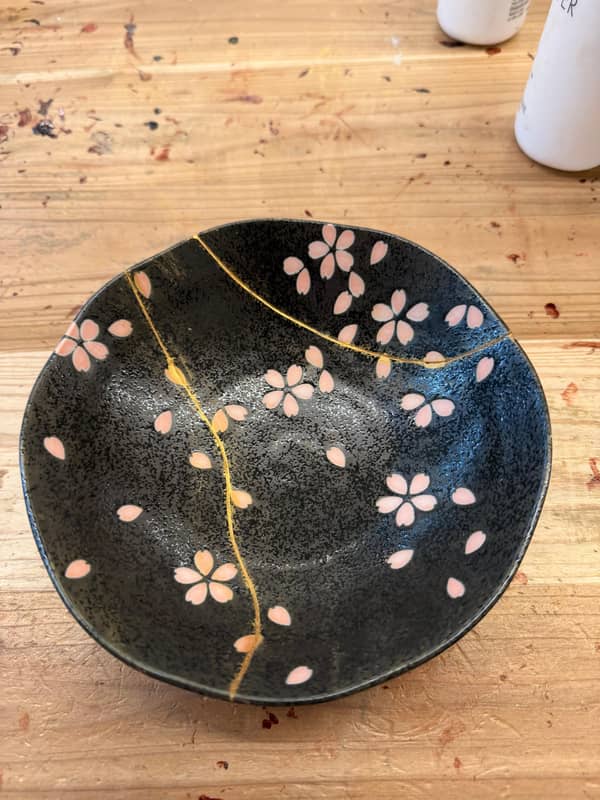
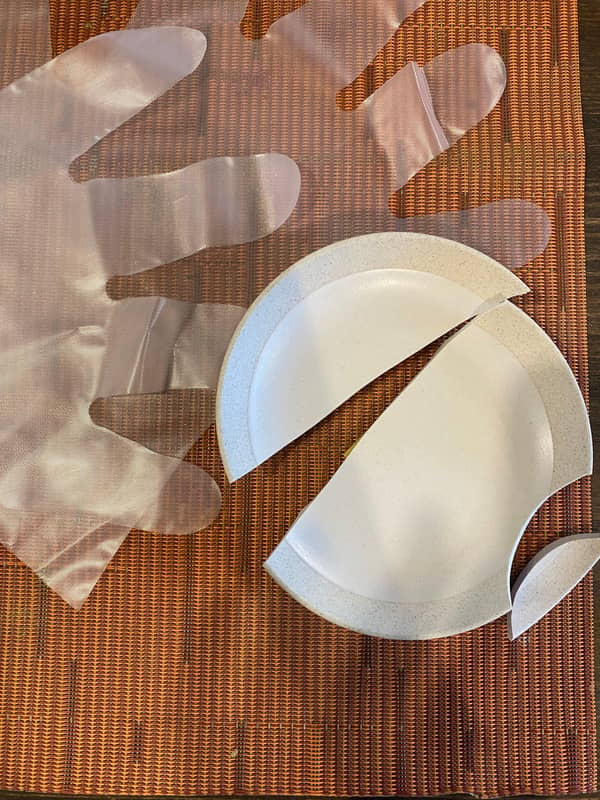
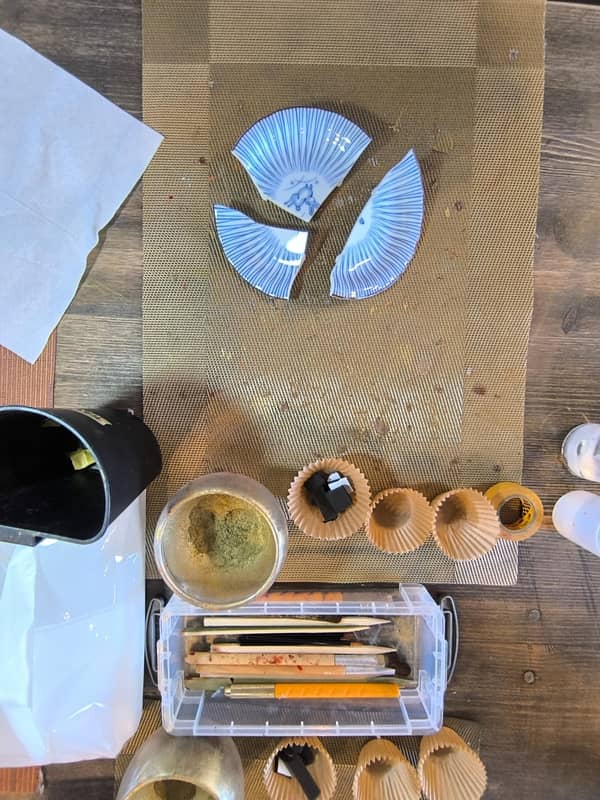
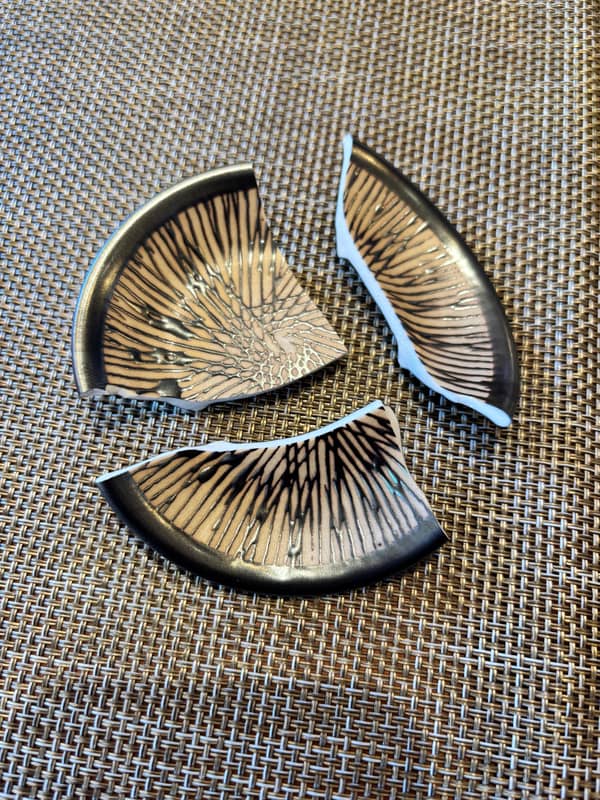
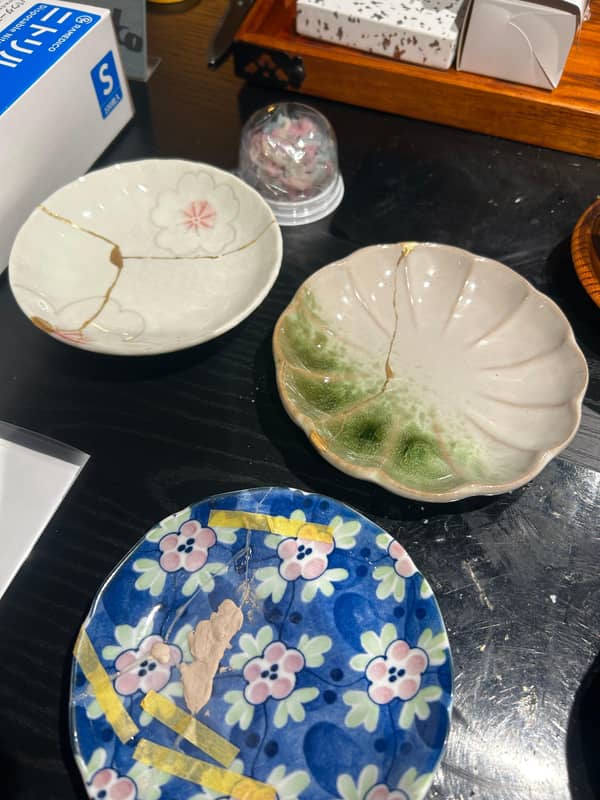
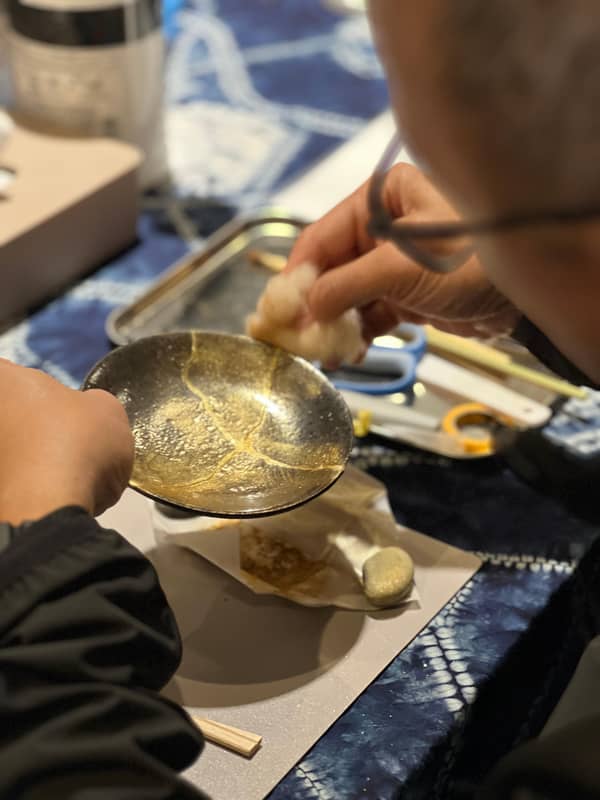
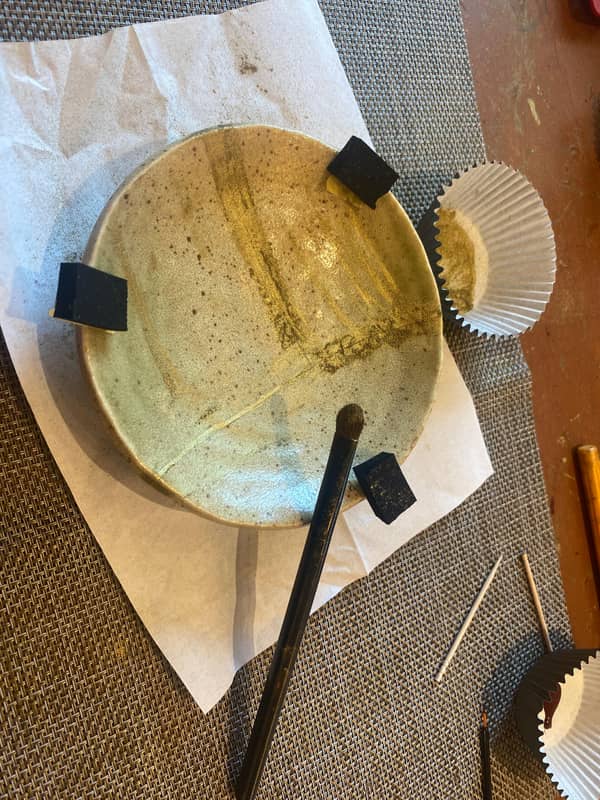
the gold line
Kintsugi is not an attempt to restore an object to its original state; JNTO's luxury guide describes it as a way of highlighting chips and fractures as a record of its history. That is the whole point of putting gold on the line, and it is why a mended bowl is shown, not hidden.
Historians date the practice to the Muromachi period, though the exact origins are not known. Ceramics used in tea ceremonies, particularly the tea bowl, are cherished objects and have often been repaired with kintsugi. The craft grew up beside the tea room, where a repaired bowl was looked at closely.
You will not be asked to believe the legend. You will be asked to put a thin line of gold where a crack runs, with a steady hand, and to see how a flaw becomes the most noticed part of a plate. Our guides on materials and repair types go further into how the line is built.
Book today, cancel free of chargeClimate chart
Monthly highs, lows and wet days come from the NOAA station in Kyoto, 4.4 km away, (1971 to 2020); day length is our own calculation.
Tap any month for temperature and rain details.
the materials
Urushi is the sap of the lacquer tree, and a LACMA conservator describes it as toxic, a relative of the poison ivy family, and able to irritate the skin and throat of people who are sensitive to it. If poison ivy has ever given you a rash, say so before you sit down.
The metal on top is usually gold powder, though brass or silver are used in some cases. Gold costs far more than brass, which is why practice sessions often use brass. The record for this workshop names gold powder, and it is fair to ask whether it is real gold or a cheaper metal.
None of these questions is rude. A studio that teaches a craft expects them, and the answers tell you what your piece is made of. Our guide to kintsugi materials lists every ingredient, from the rice paste to the filler, in the order it goes on.
Book today, cancel free of charge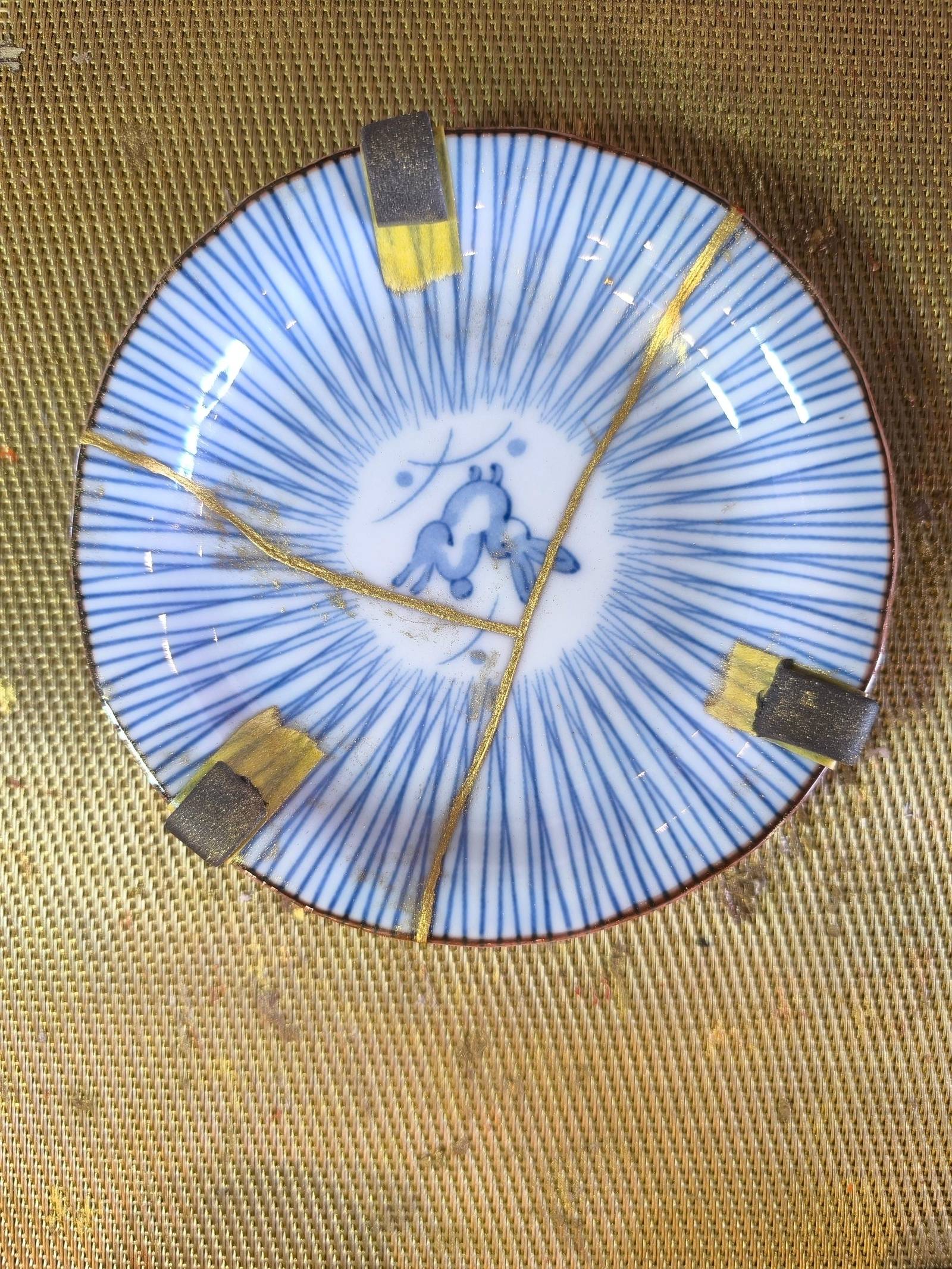
Your 90 minutes at the bench
Choose a day in Gion; cancelling is free until 24 hours out, so booking carries little risk.
finding the room
The workshop meets on the 6th floor of the building named Zen, Kyoto Annex. The record gives public transportation nearby but no street address in our sources, so use the confirmation you receive for the precise meeting point and leave yourself a few spare minutes to find the entrance.
The Kyoto City Tourism Association describes the Gion and Kiyomizu area as one district: Kiyomizu-yaki pottery was developed there, so the streets between the temples are filled with souvenir shops for ceramics, and Gion developed as a town near the gate of Yasaka-jinja Shrine.
That makes the workshop an easy start to a day on foot. Our guide to Kyoto pottery maps the slopes and the pottery district, and our buying guide pins the craft shops and the monthly markets, so a morning at the bench can lead to an afternoon among the bowls.
Book today, cancel free of chargeRatings
Every one of the 1,736 ratings this tour has received is counted in the bars, and they average 4.9.
from $18 · free of charge to cancel
Instantly confirmed · booked through Viator
what the ratings say
The workshop has 1,736 ratings on Viator, averaging 4.9, and 1,668 of them are five-star. Beyond them the ratings are thinly spread: 58 four-star, 7 three-star, 2 two-star and 1 one-star rating. The sample is large and it leans hard toward the top score.
The reviews we can read tend to praise patient instructors and an easy, relaxed pace, even for people who say they are not artistic. A few mention that the room was hard to find, and one says the session ran longer than the listing suggests. That is the sort of detail a rating cannot carry, so it is worth reading a handful before you book.
In short, the workshop has been tested by many guests and the lower scores are few. A craft session is personal, and one guest's hour will not match another's, so treat the average as encouraging rather than guaranteed.
Book today, cancel free of charge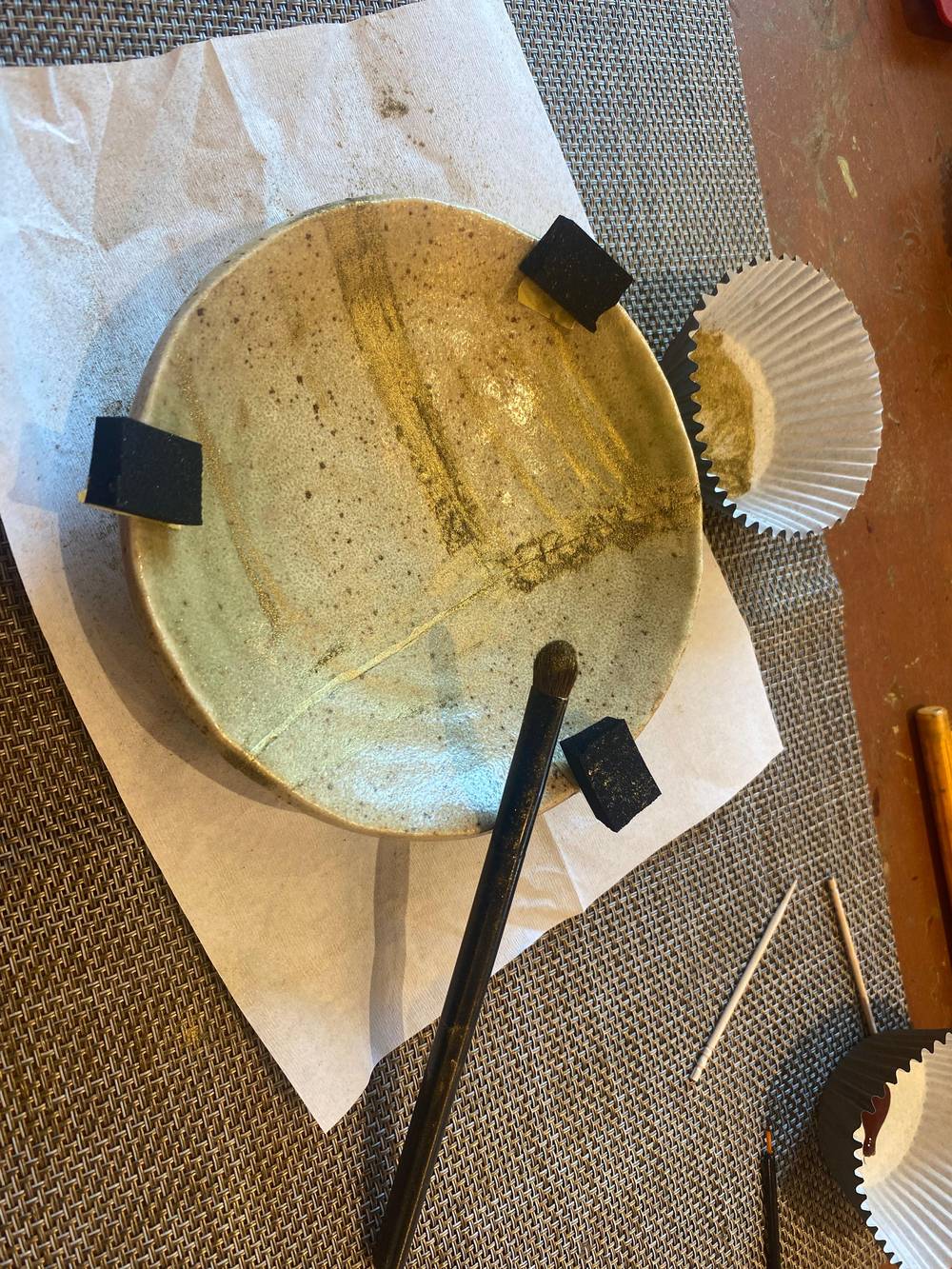
FAQ
The meeting point is the building named Zen, Kyoto Annex; your confirmation gives details.
You clean the cracks, join the pieces, apply gold and finish the piece.
A shared group is led by a live guide who speaks English.
The record names traditional urushi lacquer and gold powder; a plates upgrade is available.
That is the lowest price; the booking panel shows the exact figure for your date.
Cancel at least 24 hours ahead and the full amount is returned.
Children under 7 cannot participate and every booking needs an adult.
It is also listed as suitable for every level of physical fitness.
Of those ratings, 1,668 are five-star.
Kyoto's rainy season spans early June to mid-July.
what you take home
You finish the piece to take home, according to the record, which lists a plates upgrade option as an extra. The listing does not name the plates or say whether you may bring your own, so ask the studio by email if you hope to mend a piece of your own.
A repaired piece is a keepsake first. Some Kyoto classes use materials that dry on the spot so that a piece can be packed the same day, one listing says, while others stay with traditional lacquer that needs weeks to cure. Which kind you hold decides whether the bowl is for the shelf or for the table.
Our page on food safety and care sets out what the sources say about eating from a mended piece. Until you have the maker's word that the lacquer has hardened, treat the plate as decoration, wrap it in soft paper and carry it in your hand luggage.
Book today, cancel free of chargeHow long the old repairs hold
Web Japan points to repairs over 200 years old that are still intact.
It treats them as proof of how durable natural materials are, which is why the classical method uses only urushi, rice powder and mountain soil.
cost and cancelling
The workshop begins at $18 per person. That is an opening figure for one person, not a quote; the panel on this page reads the live price for your date straight from Viator, and an upgrade to a nicer plate would add to it.
Cancelling is straightforward: a full refund is given until 24 hours before the start, and none inside that window. If plans may change, put the cut-off in your calendar.
A mobile or paper ticket is accepted. The booking sits with Viator, and any change goes through them, so keep the confirmation email with the meeting floor and time where you can find it from a street corner.
Book today, cancel free of chargeOur Gion workshop in brief
Our recommended kintsugi workshop in Kyoto is a 1.5-hour session in Gion, meeting on the 6th floor of the Zen Kyoto Annex building, with a live guide in English and a shared group of up to 16. You repair a ceramic bowl or plate with traditional urushi lacquer and gold powder, according to the record. It begins at $18 per person and holds 1,736 ratings averaging 4.9 on Viator.
Free cancelling until the day before
children and access
The record sets the age bands as children aged 0 to 12 and adults aged 13 and over, requires at least one adult in a booking and says children under 7 cannot participate; infants have to stay on an adult's lap. A child of 7 or older can join with an adult beside them.
The record lists the workshop as wheelchair accessible and suitable for every level of physical fitness, with public transportation nearby. You sit at a table and work with small tools, so the session asks for patience far more than for strength.
Urushi irritates sensitive skin, so ask how wet lacquer is handled when children are at the table and let a grown-up take any step that needs it. Families tell us, in reviews, that the activity suited mixed ages and a short attention span.
Book today, cancel free of charge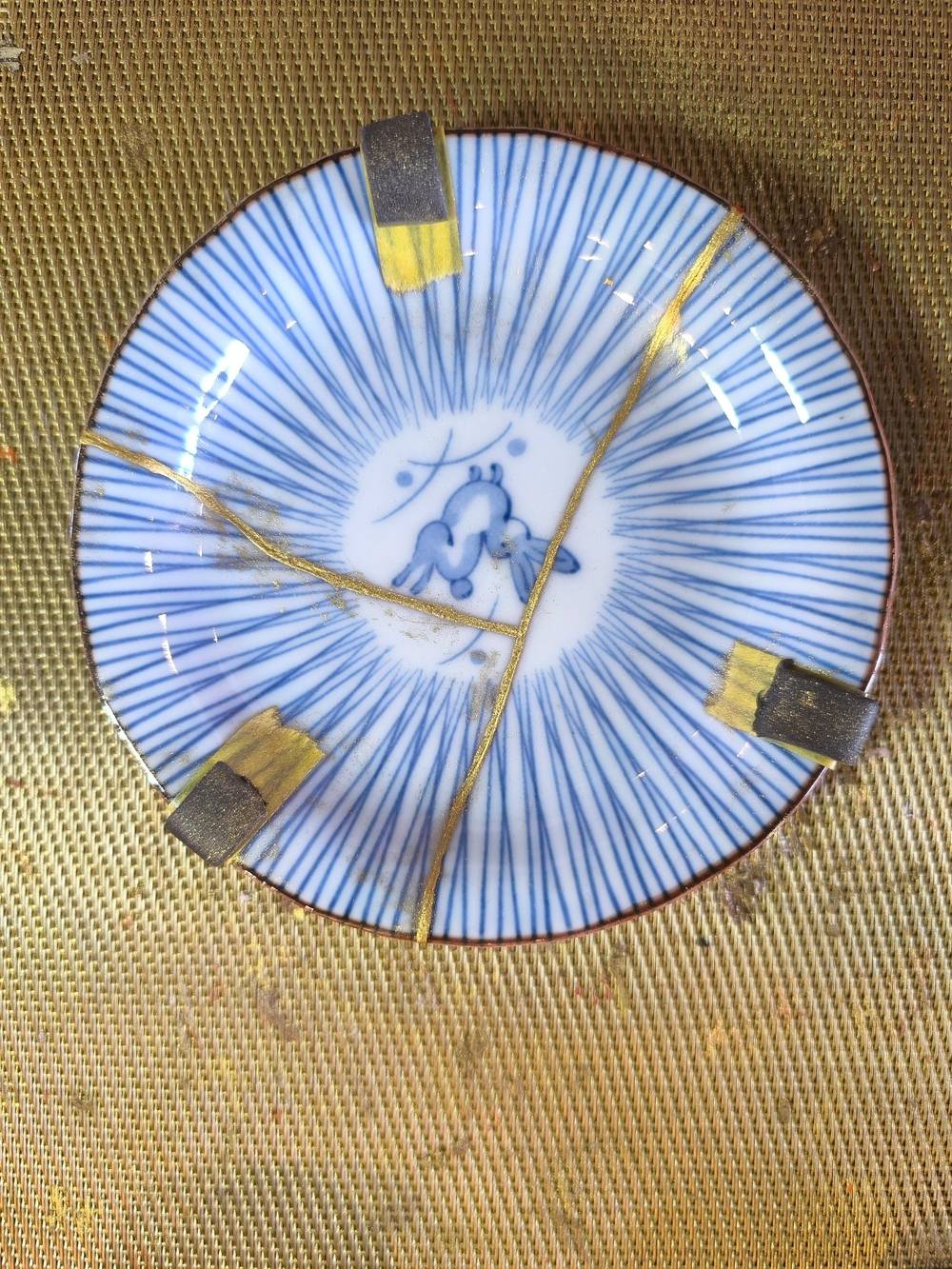
rain and heat
The workshop is held indoors, so rain does not move it. The Kyoto City Tourism Association notes heavy rain in the city between early June and mid-July, a season called tsuyu. Temperatures in midsummer often rise above 35 degrees C, and the city stays hot and humid for weeks.
Kyoto sits in a basin surrounded by mountains to the north, west and east, which gives it hot, humid summers and chilly winters. A session at a table is a good way to spend the part of the day when the sun is at its worst.
Further down, a chart gives the monthly highs, lows and rainy days from the NOAA station used for this site. Autumn is the season of maple leaves, and spring warms from mid-March, so there is rarely a month when an hour indoors would not suit you.
Book today, cancel free of chargeSecure a spot
We show GetYourGuide and Viator's live prices exactly as they appear there; none are entered manually.
Time in Kyoto now: --:--
around the workshop
Kyoto has several places to go after the bench. The Kyoto Ceramic Center was built in Gojozaka, where Kiyomizu ware originated, and it sells ceramics by Kyoto ceramists. The Kiyomizuyaki Pottery Complex in Yamashina counts nearly 70 shops and companies selling the ware.
For antiques and old mended bowls, the Kyoto City Tourism Association lists monthly markets: the Kobo-san flea market at Toji on the 21st of each month and the Tenjin-san flea market at Kitano Tenmangu on the 25th. No source promises kintsugi at any stall, but old bowls turn up.
Our pages cover each of these with a map: where to buy kintsugi in Kyoto, the Kiyomizu pottery lanes and what to ask a seller. Together with the workshop they make a day that starts with your own hands and ends with a better eye.
Book today, cancel free of chargeis it for you
It suits beginners, couples, families with children of 7 or older and anyone who wants a hands-on hour that breaks up a day of temples. The record names no prerequisite and lists the class as suitable for all fitness levels.
It is a weaker fit if you want a long, deep lesson, a piece for the dinner table, or the repair of an heirloom. JNTO describes kintsugi as needing many years of practice before it is mastered, and a Fukui workshop says most of its clients bring heirlooms and sentimental items. For those, ask a craftsman, not a class.
Be honest about the finish too. A 90-minute class produces a first repair with some steps prepared, not a master's piece. If you want to learn more, our guide on how hard kintsugi is sets out the ladder of longer sessions, and our repair-cost guide tells you how to bring a piece of your own.
Book today, cancel free of charge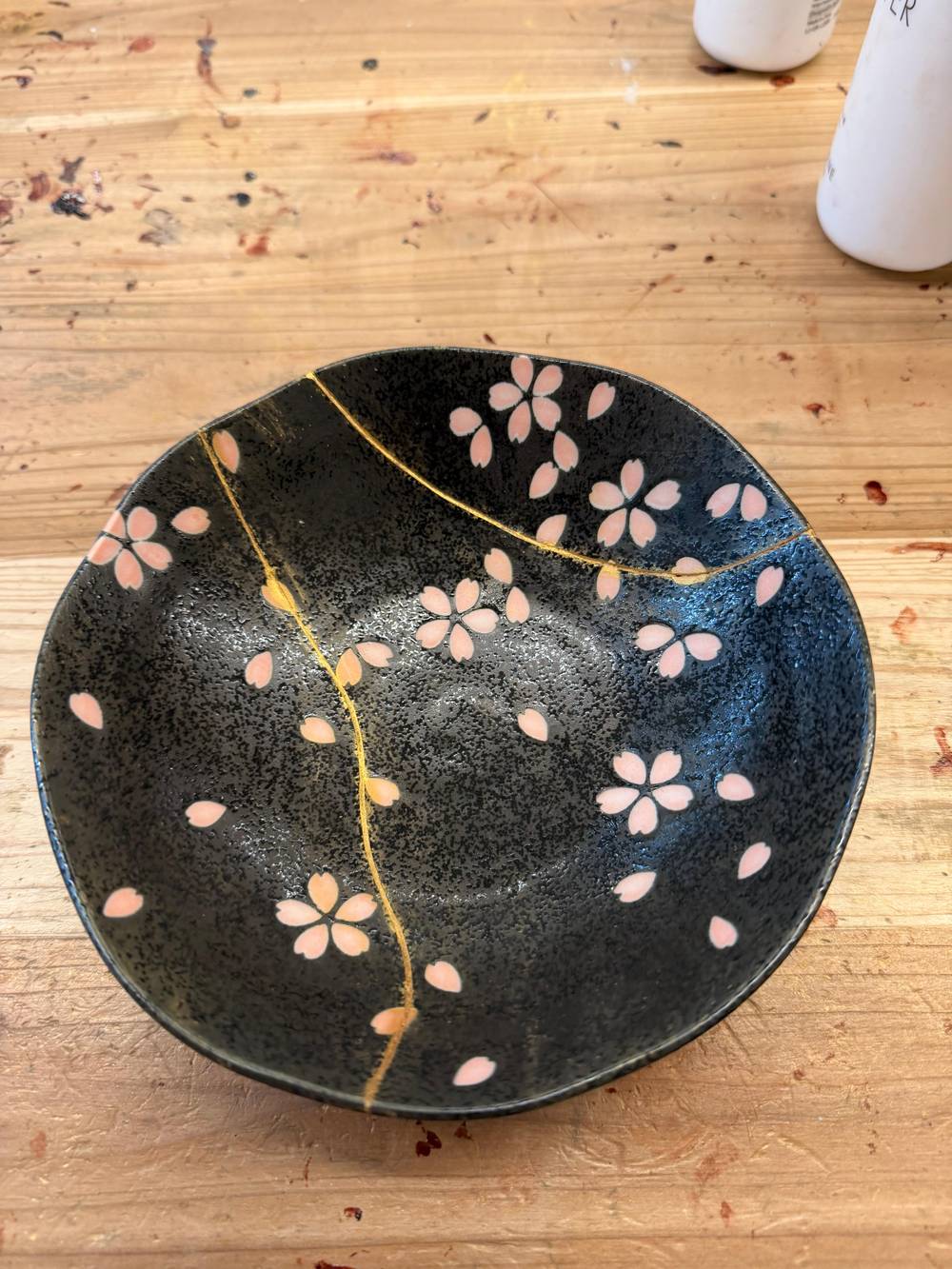
Wondering what goes into a gold repair? A real person answers here.