Fits a trip
A single class
The easiest first step
- Time90 minutes
- SkillNone needed
- You leave withA mended piece
Decision guide
Short answer
Kintsugi is difficult to master but easy to try: a beginner can finish a piece in one class, while a museum conservator says mastery takes a lifetime.
Why it is hard
Two questions, one pick
Say how long you can sit and what you want to make, and a session appears with its starting price.
Suited to you
from $16
It runs 1 hour and has 1,112 reviews.
Suited to you
from $18
It runs 1.5 hours and holds 1,736 Viator ratings.
Suited to you
from $108
It runs 2.5 hours and is limited to 4 participants.
Suited to you
from $105
It runs 2.5 hours and makes jewelry with natural stones.
A first bowl is within reach of almost anyone. The craft behind it is not. Here is what a beginner can finish in a Kyoto class, what separates that from mastery, and the steps that lead from one to the other.
Editorial team, kintsugikyoto.com · Updated November 6, 2026 · Reading: 7 min
Facts at a glance
Is kintsugi difficult depends on what you mean by kintsugi. If you mean finishing a mended plate in an afternoon, the answer is no: workshops are built for beginners. If you mean doing it the way a lacquer master does, the answer is very. JNTO calls kintsugi a refined art form in Japan that needs many years of practice before it is mastered.5
A LACMA conservator is blunter: becoming a master of it takes a whole lifetime.1 That is a museum conservator speaking, a person who knows the stakes, so the remark is not modesty. It tells you that the skill lies in judgment, in knowing when a surface is right, and that no class can hand you that judgment in an hour.
The sensible way to hold both answers is to think of two crafts that share a name. One is a creative hour that you can enjoy with no skill at all. The other is a slow trade with its own materials, its own waiting and its own risks to the skin. This page tells you where the first ends and the second begins.
Levels of learning
| Level | What you do | Time | Skill needed |
|---|---|---|---|
| Gion workshop | Repair a bowl or plate | 90 minutes | None |
| Short course | Try one or two steps | A few hours | None |
| One-day experience | A fuller repair | A day | Curiosity |
| Master class | The craft in depth | 6 or 12 days | Commitment |
| Kit at home | Practice on a cheap plate | Your own pace | Patience |
The Gion record, JNTO's course guide and Web Japan supply the rows.6,7,9
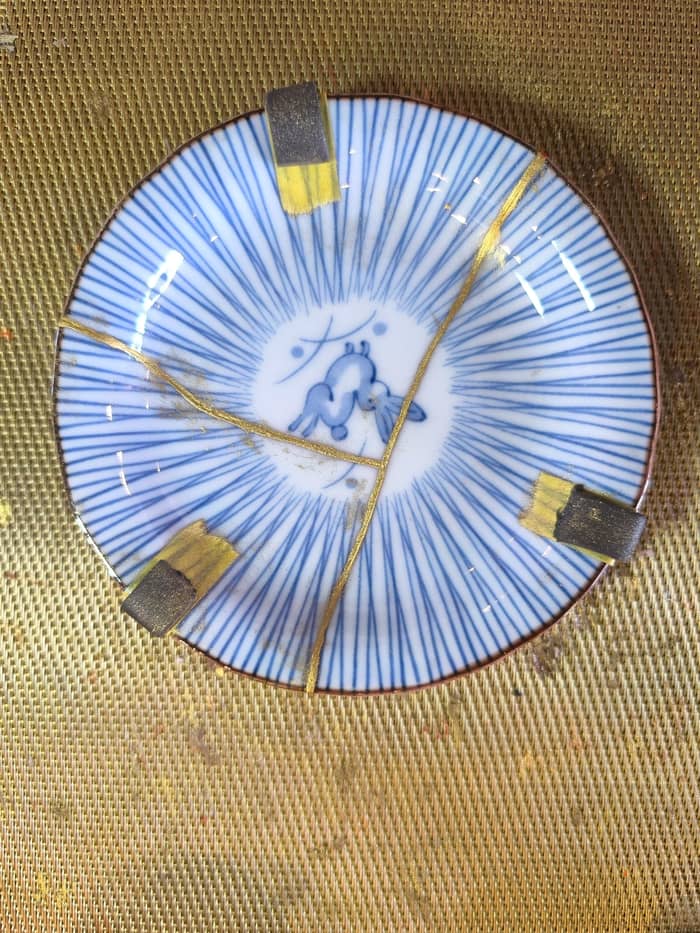
The Viator record for our Gion workshop lists the steps a guest takes: clean the cracks, join the pieces, apply gold to the repaired lines and finish the piece to take home. You work on a ceramic bowl or plate, and the record says the class is suitable for every level of physical fitness. Nothing in it asks for previous experience.
A beginner's hand will do the visible parts well enough: a steady line, a light touch with the powder, a calm pace. Japan House London designed one beginner workshop with some shortcuts so participants could complete a finished product, as an accessible introduction to the principles and techniques.3 That is how a short class gets from broken to finished in one sitting.
What a beginner cannot do in 90 minutes is wait. Urushi cures slowly, which is why JNTO describes a one-hour experience of traditional kintsugi as highly uncommon.8 Expect the class to hand you a piece in which the slow steps were prepared, or were done with a faster material, and enjoy the parts that are really yours. Asking which is which is not rude; it is the question the whole craft invites.
The length of a course
The course lengths come from JNTO's listing of a Tokyo kintsugi master.4
The first hard part is the fill. LACMA's conservator says it is hard to teach because it takes practice to see and feel when a fill is correct, and that learning it involves some trial and error.2 A fill that is a little high looks like a scar for the wrong reasons, and under a gold line it cannot be hidden.
The second is time. Web Japan says it can take up to two months to complete a piece, because urushi takes time to dry, and JNTO says that with traditional materials a repair can take several months.11,12 A craft that makes you wait this long rewards patience more than talent, and it punishes the urge to rush a layer.
The third is the material itself. Urushi is toxic to touch, belongs to the poison ivy family and can irritate the skin and throat of people who are sensitive to it.13 Learning to handle it safely is a skill in itself, and it is one reason a repair with real lacquer is usually taught by a person at your elbow rather than by a video.
Three ways to start
Fits a trip
The easiest first step
For committed learners
For real learning
Cheapest
Practice on your own
How to learn kintsugi in steps: start with a single class and see whether you like the work. JNTO suggests that the best way to understand a complex craft is to experience it hands-on where a seasoned practitioner can assist you, and that many places offer short introductory courses for visitors with a few hours to spare.14,6
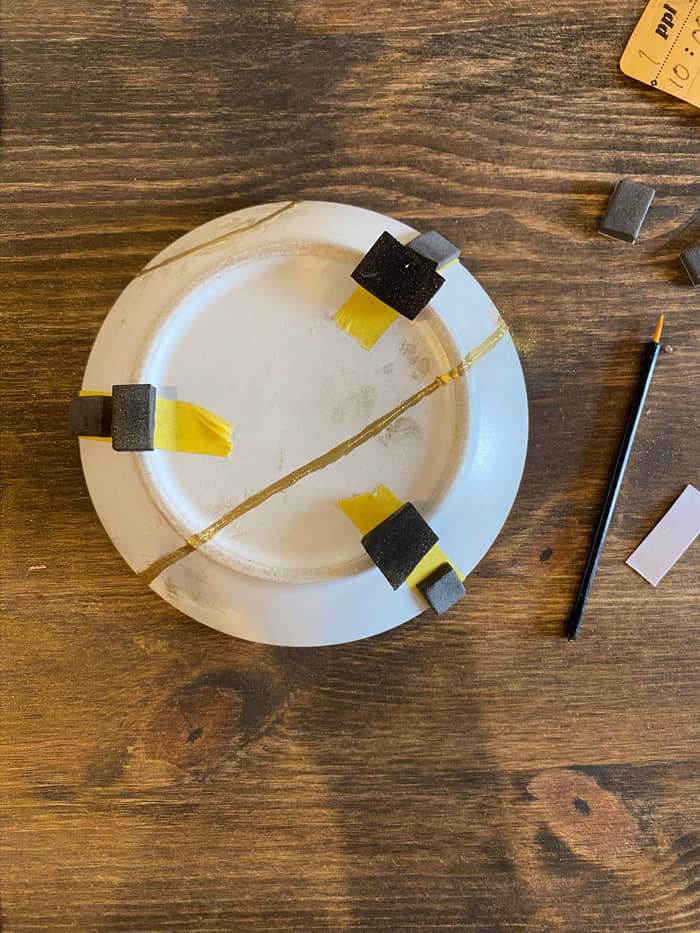
If it takes, go longer. A Tokyo master listed by JNTO runs workshops that range from a 1-day workshop to master classes over 6 or 12 days, with the tools and materials provided.4 The same master offers, in JNTO's luxury guide, a choice of a one-day kintsugi experience or a 6-day or 12-day master class.7
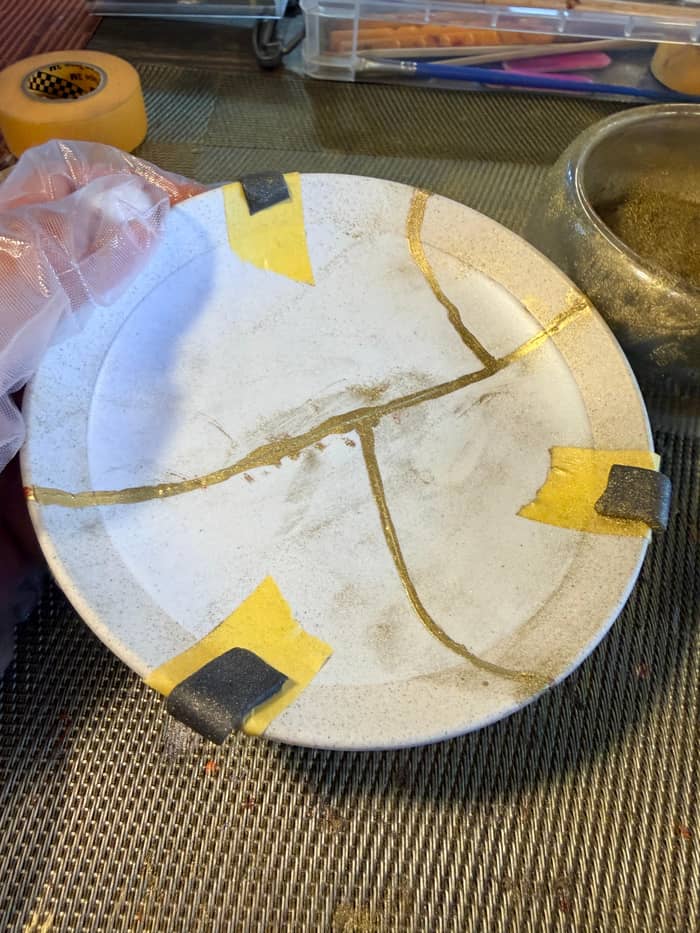
Below that sit kits and videos. Web Japan notes that the necessary tools and materials are often sold together as kintsugi sets, and that in-depth videos on the technique are available.9 These are good for practice on a cheap plate, with a safer binder, after you have seen a real repair done in front of you.
A learning path
First
A short introductory course is the usual start.6
Next
Some Kyoto sessions run 2.5 hours.
Then
A Tokyo master offers a one-day experience.7
Later
The same master runs 6 or 12 day classes.7
Ongoing
Mastery takes many years of practice.5
A kintsugi course in Kyoto, from a first class to a longer session, depends on how much time you can give. Our own Gion workshop runs 1.5 hours, takes a shared group of up to 16 and begins at $18 per person, led in English. It suits a first try, and the free cancellation window runs to 24 hours before the start. It is a gentle way to find out whether the craft suits you before you commit more time or money.
There are other shapes of session in the city. One GetYourGuide listing runs 1 hour from $16, another 1.5 hours with an optional upgrade, and a third runs 2.5 hours in an afternoon format with tea. JNTO also lists a Kyoto lacquerware house, Yamada Heiando, where you can watch an artisan demonstrate before trying kintsugi yourself.15
Choosing between operators is a separate question, and a sister guide covers it. Here the point is skill: if you want to learn rather than to make a souvenir, pick the longest session that fits and ask the instructor what the steps do after you leave. That one question tells you how much of the craft you have actually practiced.
Video
Dave Fogler at the Cinodrome on YouTube · Video data is requested only when you tap play.
Kintsugi remains a refined art form in Japan, taking many years of practice to master.
Checklist
Kintsugi is gentle on the body. The record for our Gion workshop lists it as suitable for every level of physical fitness and wheelchair accessible, with public transportation nearby. You sit at a table and work with small tools, so strength and stamina matter far less than patience and a steady hand. If anyone in your group has trouble with stairs, ask the studio about the building before you book.
The age rules are more specific. The record sets the age bands as children aged 0 to 12 and adults aged 13 and over, requires at least one adult in a booking and says children under 7 cannot participate; infants have to stay on an adult's lap. A family with a child of 7 or older can book, but the child needs an adult beside them.
The slow-craft nature of kintsugi means a short class is a better fit for children than a long one. If your child is on the young side of the range, expect a short attention span and let the grown-up handle any step where lacquer is wet. The skin warning above applies to everyone who touches it, whatever their age, so ask the instructor how wet lacquer is handled on the day.
Practice on something cheap. A plate from a flea market, broken on purpose and repaired, will teach you more than an heirloom ever should. Kits sold as sets keep the tools in one box.9 For a quick, low-risk first try, Web Japan describes a simpler method using a water-resistant craft glue that can be safely used on tableware.16
Know when to stop. Repairs of precious or sentimental pieces are work for a trained craftsman: a lacquer workshop in Fukui says most of its kintsugi clients arrive with heirlooms and sentimental items.10 JNTO calls it a refined art form in Japan that takes many years to master, which is a fair warning before you pour effort into a treasure.5
A good rule is to decide the piece's value before you start. If you would be sad to lose it, do not learn on it. If you would be pleased to see it with a line of gold, it is a fine project. Either way, a class first and a kit second keeps both you and the plate in better shape, and it keeps the first repair from being the last one.
FAQ
Beginner workshops include shortcuts so you finish a piece in one sitting.3
It takes practice and some trial and error to feel when a fill is correct.2
Our workshop lists a group of up to 16 and an English-speaking guide.
Children under 7 cannot participate and every booking needs an adult.
JNTO lists a Tokyo master whose workshops reach 6 or 12 days.4
Tools and materials are often sold together as kintsugi sets.9
Sources
Also worth reading
Wondering what goes into a gold repair? A real person answers here.